
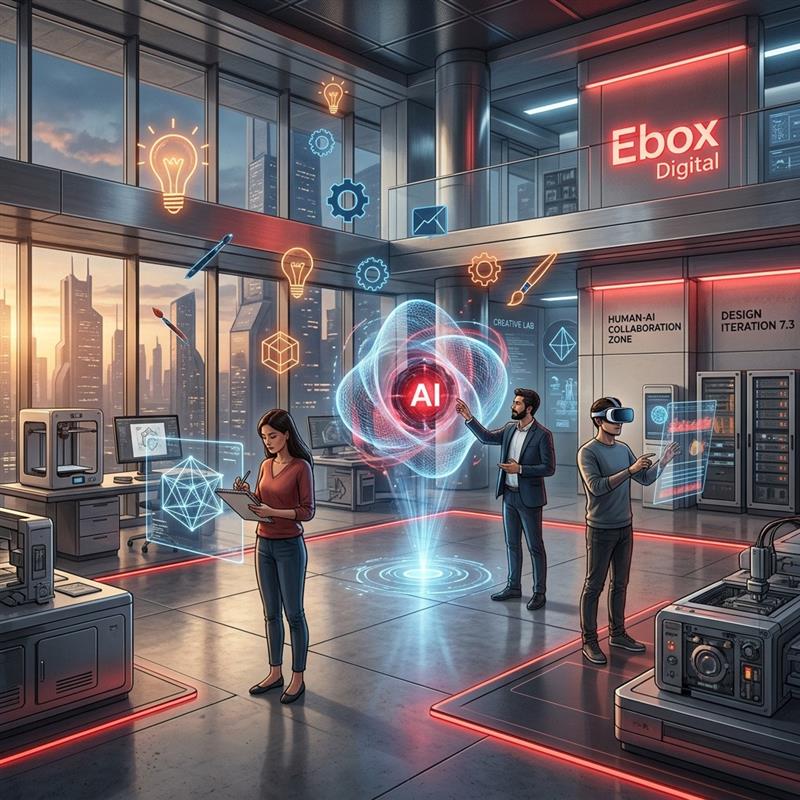
Artificial Intelligence has significantly changed the creative industry. Today, design tools can generate illustrations, graphics, and even videos within seconds.
As a result, many businesses see this as a shortcut to faster content production.
However, design is not only about producing visuals. It is about communicating ideas, emotions, and brand identity.
This is where human creativity remains essential.
What AI Design Tools Can Do
AI design tools are highly efficient. They can quickly generate visual concepts based on simple prompts.
For example, they can produce:
- social media graphics
- concept illustrations
- visual mockups
- design inspiration
Because of this, they are extremely useful for speeding up the creative process.
For designers, AI becomes a tool that expands possibilities and allows faster exploration of ideas.
The Risk of Generic Visual Content
Despite their capabilities, AI-generated visuals often feel similar.
This happens because AI learns from existing patterns. While it can combine and reinterpret styles, it rarely creates a truly distinctive identity.
As a result, many brands end up looking alike.
For businesses that want to stand out, this creates a real challenge.
A strong visual identity should be:
- distinctive
- consistent
- aligned with brand positioning
- recognisable across platforms
Without clear direction, visuals may look appealing but lack coherence and impact.
Why Creative Strategy Matters
Design is not just execution. It is a strategic process.
Professional designers go beyond creating visuals. They define how a brand should be perceived.
This includes:
- brand personality
- colour psychology
- typography hierarchy
- visual storytelling
Each of these elements influences how audiences interpret a brand.
For instance, a luxury brand, a restaurant, and a technology company should not communicate in the same visual language.
Understanding these differences requires experience, cultural awareness, and marketing insight.
AI as a Creative Accelerator
AI plays an important role when used correctly.
On one hand, it allows designers to explore concepts faster. On the other hand, it helps test and refine ideas more efficiently.
As a result, the creative process becomes more dynamic.
However, final decisions still rely on human judgment.
Design direction, brand consistency, and messaging cannot be automated. They must be guided.
When combined properly, AI and human creativity lead to stronger and more refined outcomes.
The Future of Design
AI will continue to evolve and improve creative workflows.
At the same time, competition between brands will increase. As more businesses gain access to the same tools, differentiation becomes more important.
Because of this, relying only on AI-generated visuals will not be enough.
The brands that stand out will be those that invest in clear creative direction and strong visual identity.
Final Thought
AI can generate visuals.
However, it cannot define meaning.
And in design, meaning is what creates impact.
Closing Note
If your goal is not just to produce visuals, but to build a strong and recognisable brand, creative direction will always make the difference.